

















































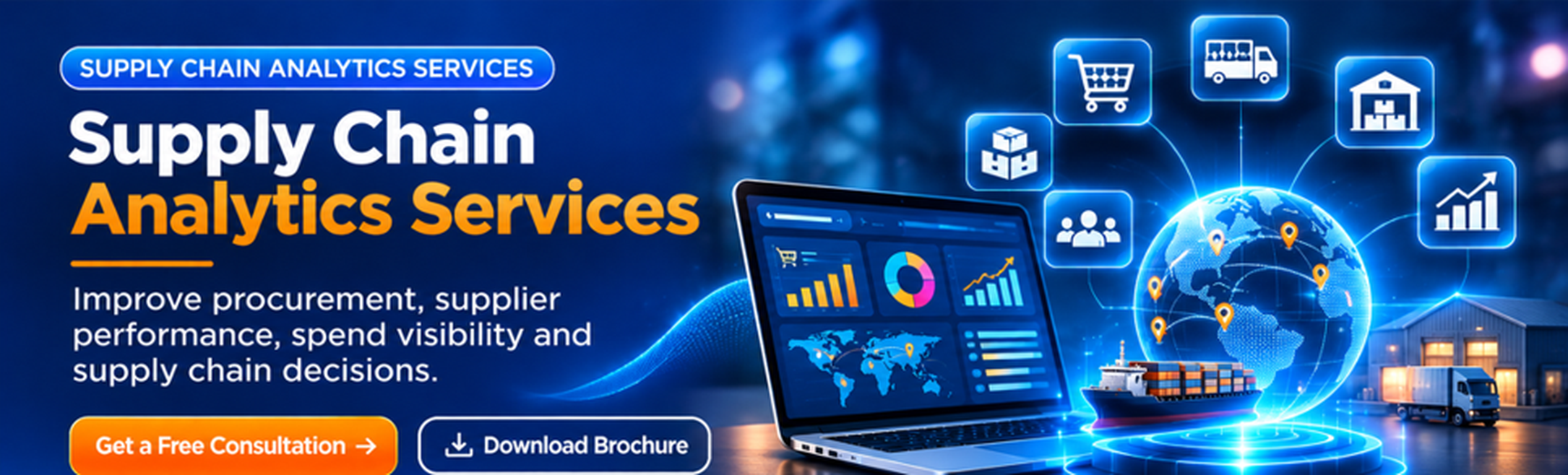
SUPPLY CHAIN ANALYTICS SERVICES
Improve procurement, supplier performance, spend visibility and supply chain decisions.
Our 5-Step Analytics Process
A structured 5-step approach to convert your procurement and supply chain data into actionable insights.

Optimize Procurement
Gain spend visibility and drive cost savings across categories.

Enhance Performance
Monitor, evaluate and mitigate supplier delivery and quality risks.

Gain Spend Visibility
Analyze spend, identify opportunities and reduce maverick leakage.

Strengthen Chain
Track demand, inventory and supply network resilience.

Make Smarter Decisions
Use analytics and AI for agile, data-backed supply chain actions.

Our Supply Chain Analytics Services
Transform procurement and supply chain data into cost savings, stronger suppliers, and a resilient supply chain.
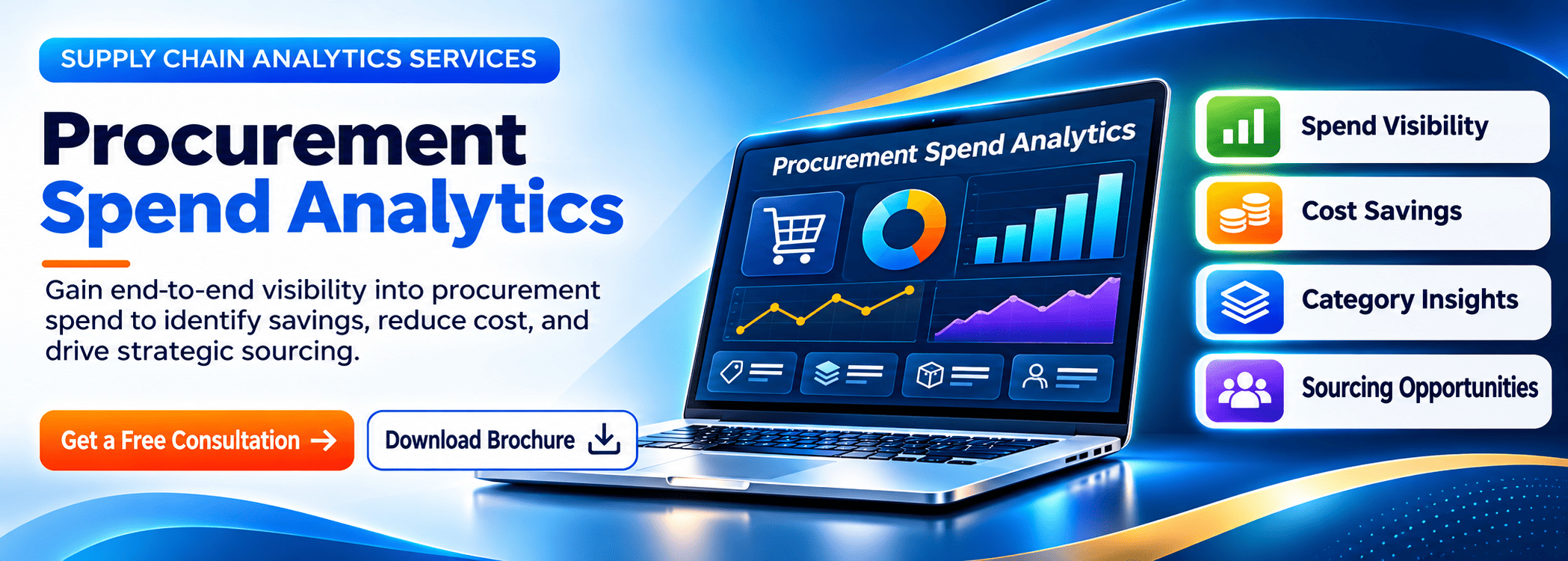
01. Procurement Spend Analytics
Analyze procurement spend to gain visibility and control costs effectively.
Key Features:
- Consolidate spend across categories, suppliers, and business units.
- Identify savings, price trends, and consolidation opportunities.
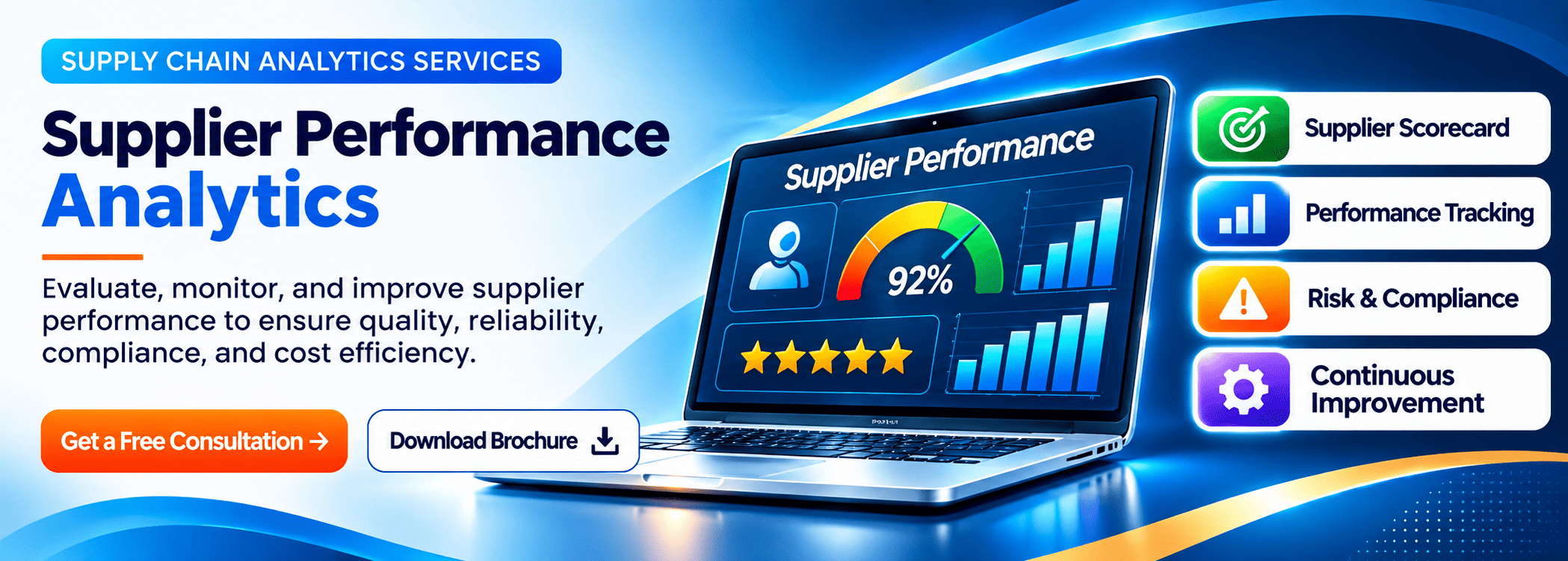
02. Supplier Performance Analytics
Track and evaluate supplier performance to ensure quality and reliability.
Key Features:
- Measure supplier KPIs like delivery, quality, cost, and compliance.
- Identify high-risk suppliers and improvement areas.
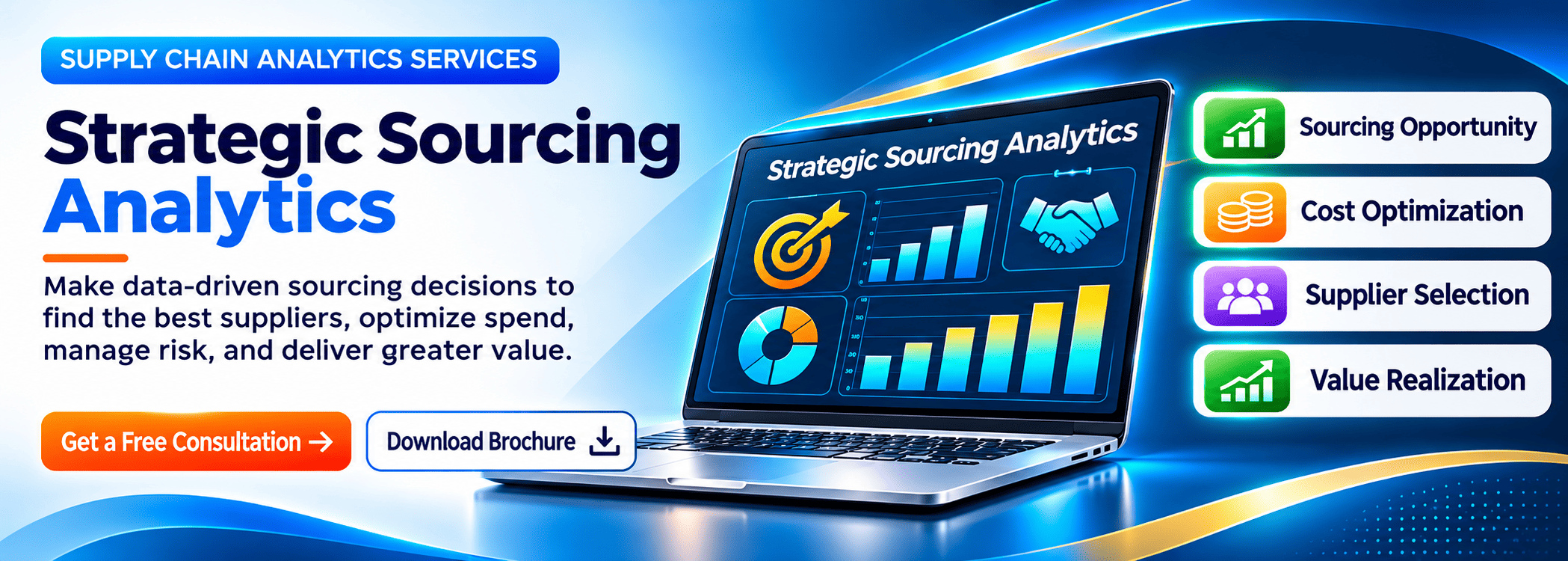
03. Strategic Sourcing Analytics
Use data to identify the best sourcing options and create long-term value.
Key Features:
- Compare suppliers, total cost of ownership, and sourcing scenarios.
- Evaluate make-or-buy, category, and market opportunities.
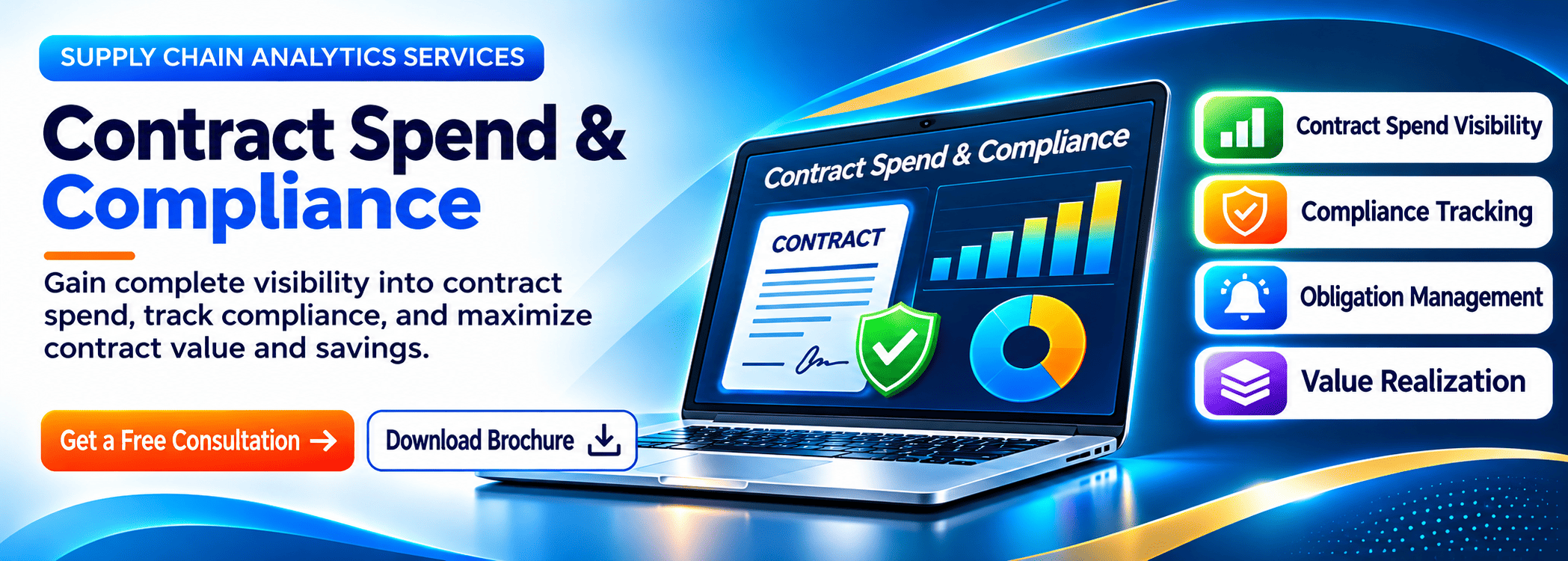
04. Contract Spend & Compliance
Gain visibility into contract spend and ensure compliance with contract terms.
Key Features:
- Track contract utilization, spend, and renewal alerts.
- Monitor compliance, obligations, and risk exposure.
05. Purchase Price Variance Analysis
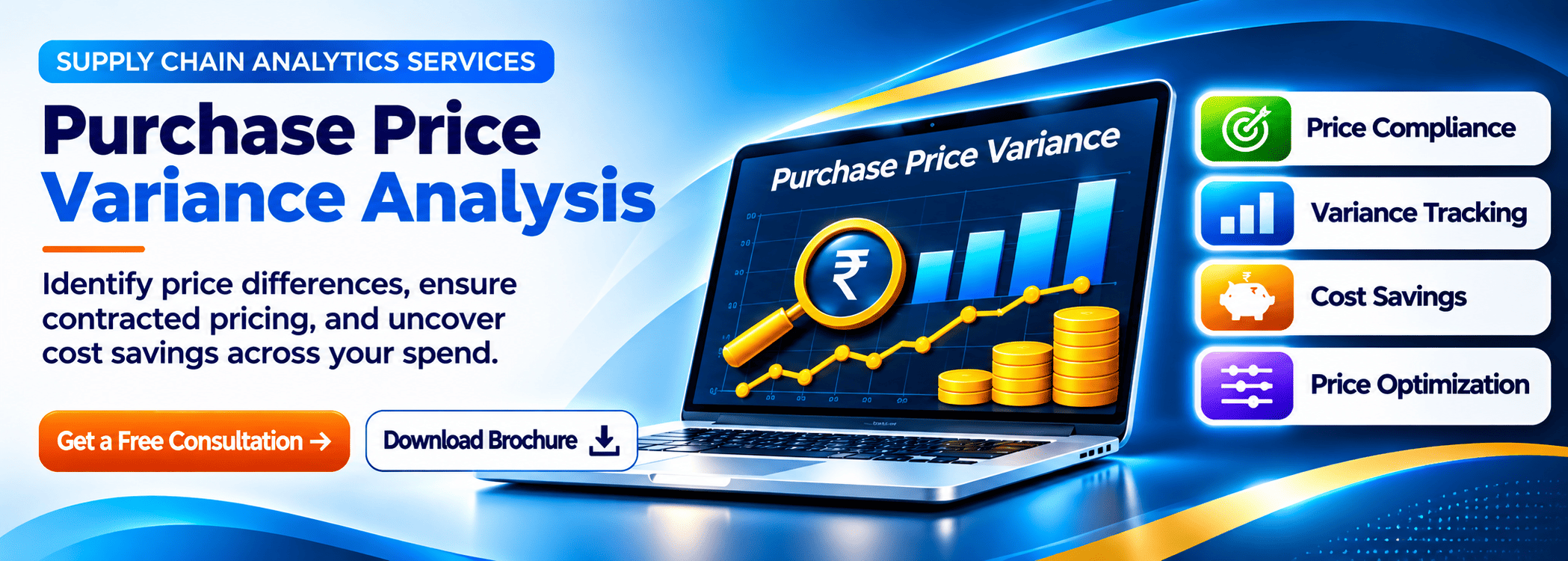
Identify and analyze price differences to control purchase costs effectively.
Key Features:
- Compare actual prices vs. negotiated or expected benchmark prices.
- Highlight variances by supplier, item, and category.
06. Inventory Optimization
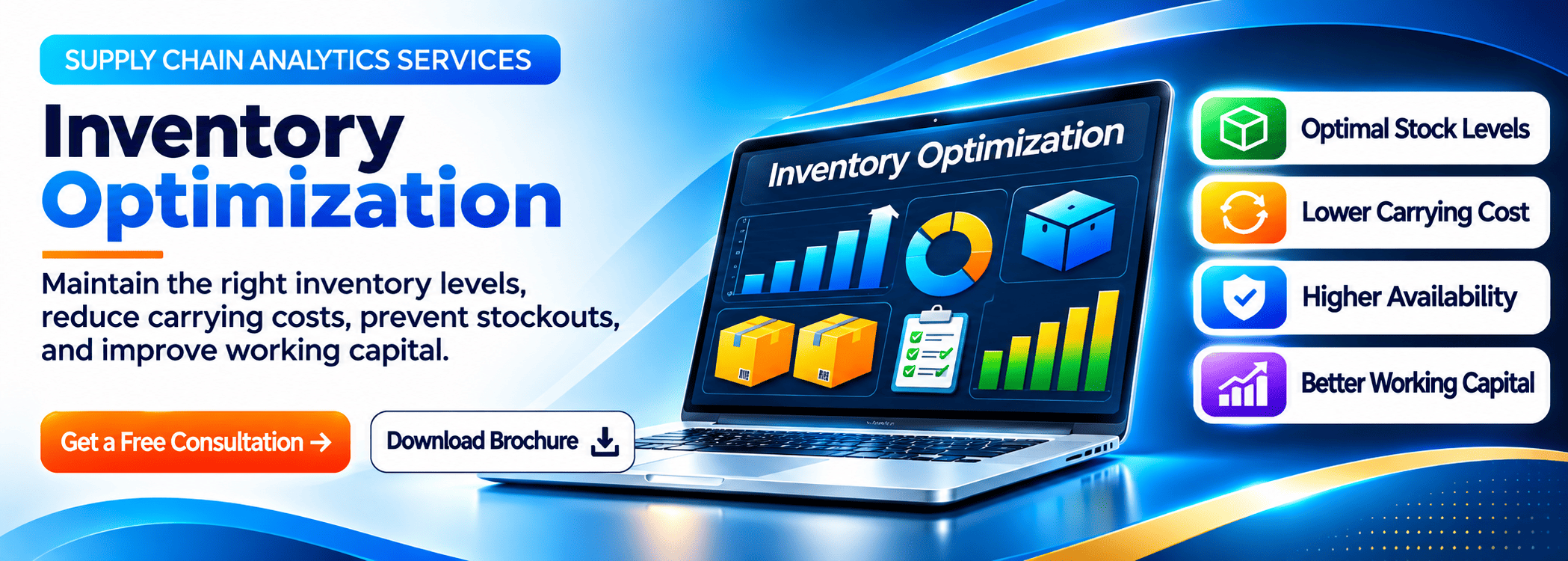
Use analytics to maintain the right inventory levels and reduce holding costs.
Key Features:
- Analyze demand patterns, lead times, and safety stock requirements.
- Identify excess, obsolete, and at-risk stock items.
07. Demand Forecasting
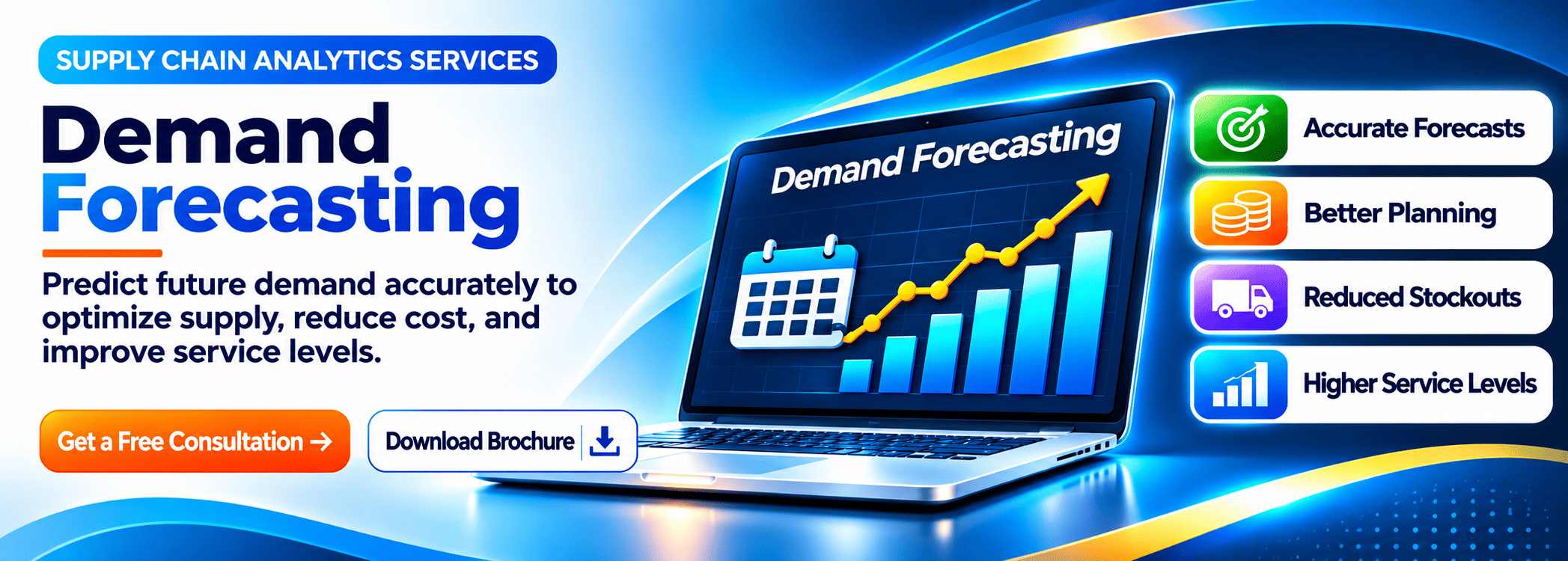
Predict future demand using historical data and advanced analytics.
Key Features:
- Generate accurate, time-based demand predictions.
- Support procurement, production, and replenishment planning.
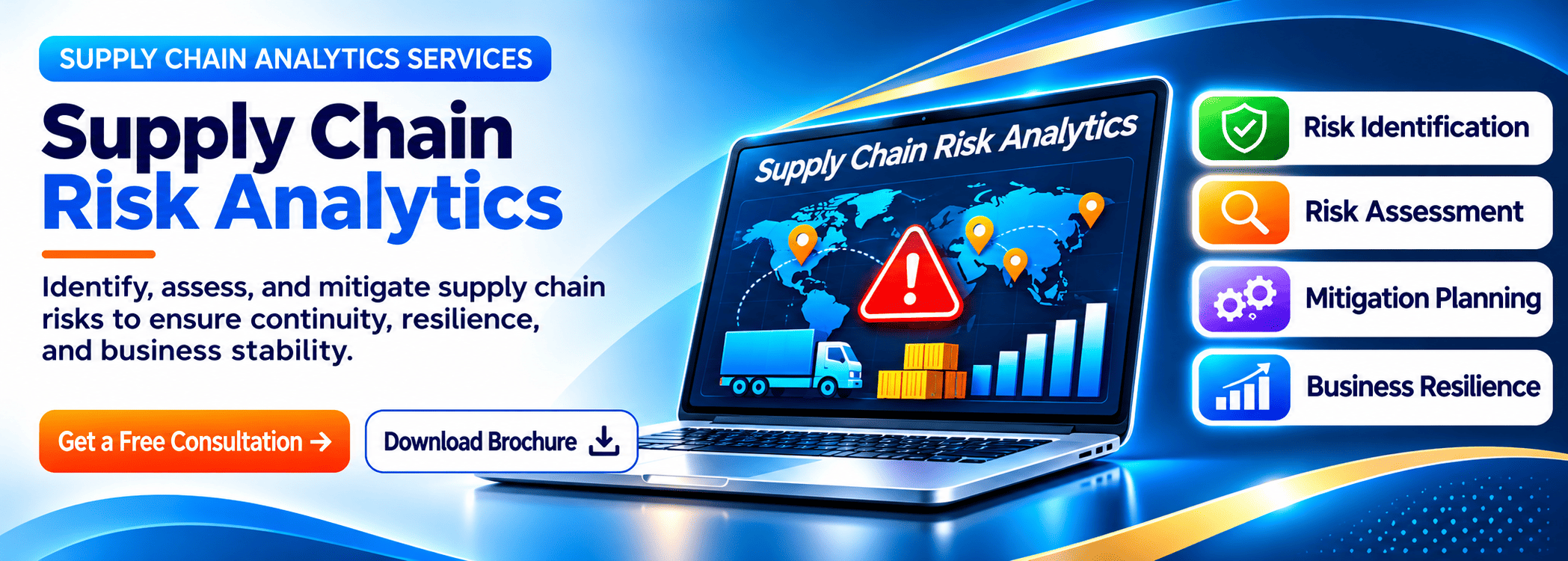
08. Supply Chain Risk Analytics
Identify and manage supply chain risks to ensure continuity and resilience.
Key Features:
- Monitor supplier dependencies, delivery delays, and concentration.
- Assess geopolitical, financial, and operational risk exposure.
09. Payment Term Analysis
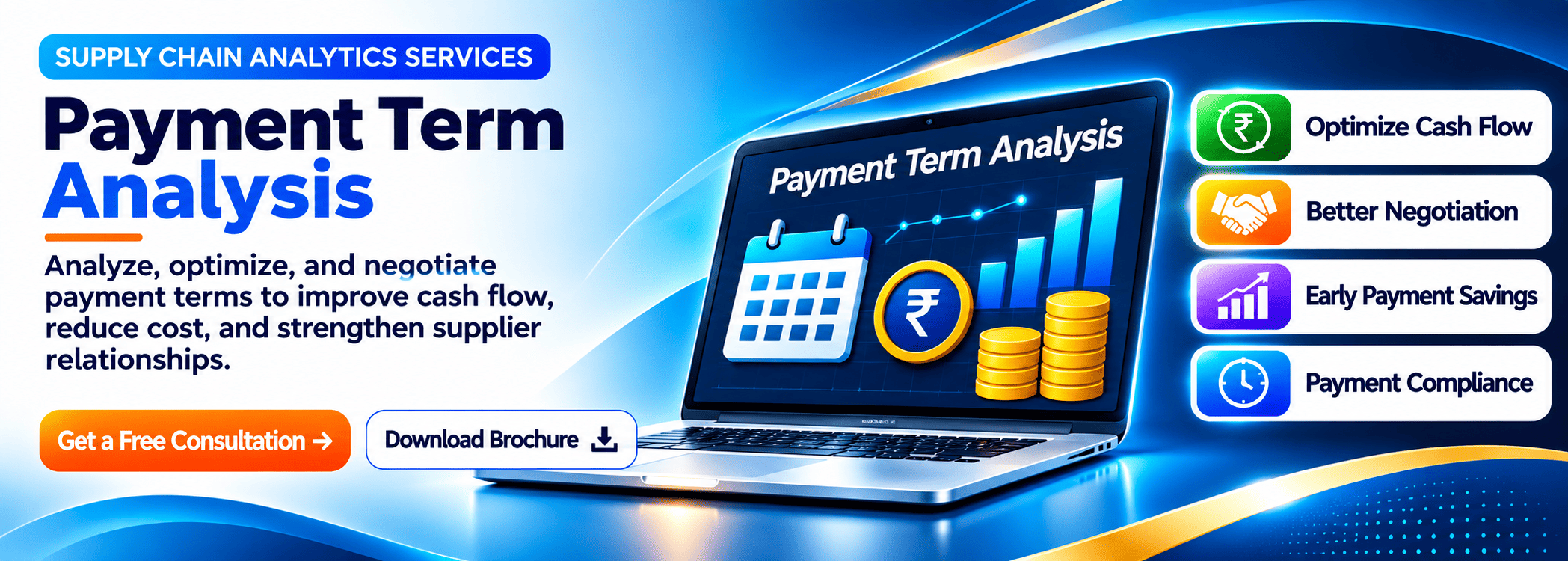
Analyze and optimize supplier payment terms to improve working capital.
Key Features:
- Assess payment terms, early payment discounts, and cash flow impact.
- Identify opportunities to negotiate better, standardized terms.
10. Tail Spend Management
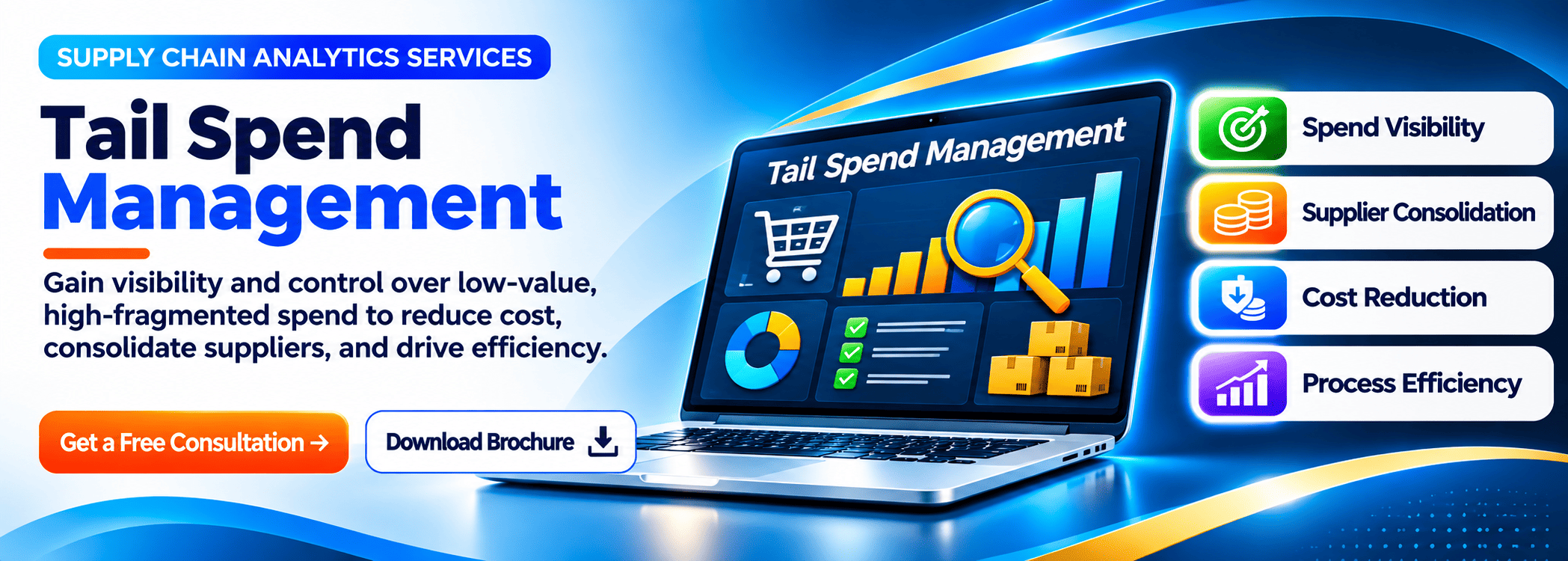
Gain control over low-value, high-volume spend to reduce waste and risk.
Key Features:
- Identify and consolidate fragmented spend across multiple suppliers.
- Improve compliance, efficiency, and supplier rationalization.
Frequently Asked Questions
Everything you need to know about our Supply Chain Analytics services and implementation approach.
Procurement Spend Analytics consolidates purchasing data across suppliers, categories, departments, and business units. It identifies spending patterns, cost-saving opportunities, maverick spending, and supplier consolidation possibilities to improve procurement efficiency and negotiate favorable commercial terms.
We analyze inventory levels, consumption patterns, lead times, safety stock, and demand trends. These insights help optimize reorder points, reduce excess and obsolete inventory, improve stock availability, and lower carrying costs while maintaining high customer satisfaction.
We analyze supplier KPIs such as on-time in-full (OTIF) delivery performance, quality pass rates, cost competitiveness, lead time adherence, and contract compliance. Our interactive scorecards help identify underperforming suppliers, monitor risks, and foster collaboration for continuous supplier improvement.
We use historical sales, consumption patterns, seasonality, promotions, and machine learning models to predict future demand accurately. Forecast insights enable organizations to plan procurement, production, inventory buffers, and replenishment with greater confidence and agility.
It evaluates supplier quotations, historical spend, market pricing trends, total cost of ownership (TCO), and sourcing scenarios. These insights empower procurement teams to benchmark suppliers, identify negotiation leverage, and execute high-value sourcing events.
We assess supplier dependencies, geographic concentration, single-source vulnerabilities, delivery delay trends, and operational risk indicators. Real-time dashboards provide early-warning alerts to trigger proactive mitigation and ensure business continuity.
We reconcile actual purchasing transactions against contracted pricing, terms, tiered rebates, and committed volumes. This pinpoints price leakage, unauthorized off-contract purchases, renewal dates, and opportunities to maximize contract utilization.
We analyze supplier payment terms, Days Payable Outstanding (DPO), invoice aging, and early payment discount opportunities. This enables finance and procurement teams to align payment cycles with cash flow needs and optimize working capital.
We compare actual purchase prices against standard, contracted, or historical baselines. The analysis highlights price variations across suppliers, locations, and buying units, uncovering overpayments and immediate cost-recovery opportunities.
We identify low-value, high-volume transactions distributed across hundreds of unmanaged suppliers. By consolidating fragmented spend into preferred vendor catalogs and automated ordering channels, organizations typically capture 5–15% cost savings and reduce administrative procurement overhead.

Ready to Build a Smarter, More Efficient Supply Chain?
Discover how IN2IN Global's Supply Chain Analytics Services can improve procurement, optimize spend visibility, and elevate supplier performance.
