






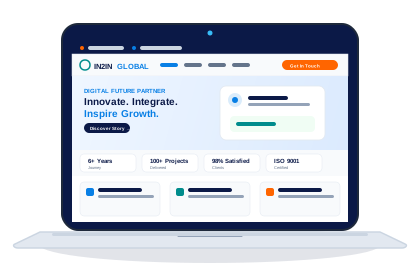
Your website can be much more than an online brochure. When designed and optimized strategically, it can become an important source of qualified leads and new business opportunities.
However, attracting website visitors does not automatically translate into enquiries or sales. Visitors need clear information, relevant solutions, and an easy way to contact your business.
Whether you operate a small business, a startup, or an established company, improving your website’s lead generation process can help you get more value from your digital presence.
In this article, we explore 10 practical ways to generate more leads through your website and create a better experience for potential customers.
1. Create a Clear and Compelling Homepage
Your homepage often creates the first impression of your business. Visitors should quickly understand what you offer, who you help, and why they should choose your company.
A strong homepage should include:
- A clear headline explaining your main value proposition.
- A short description of your products or services.
- A prominent call-to-action button.
- An overview of your key services.
- Customer testimonials or other genuine trust signals.
- Simple navigation that helps visitors find important information.
For example, instead of using a vague headline such as “Welcome to Our Website,” use a more specific message that communicates the value your business provides.
Make it easy for visitors to take the next step without searching through multiple pages.
2. Optimize Your Website for Search Engines
Search engine optimization helps your website attract people who are actively searching for the products, services, or information you provide.
To improve your chances of attracting relevant visitors:
- Research keywords related to your services.
- Create dedicated pages for important services.
- Write descriptive page titles and meta descriptions.
- Publish useful, original blog content.
- Improve website speed and mobile usability.
- Use internal links to connect related pages.
For example, a marketing agency could create separate pages for search engine optimization, paid advertising, social media management, and website design.
Each page should answer the visitor’s questions and provide a relevant next step, such as requesting a consultation.
3. Add Strong Calls to Action
A call to action (CTA) tells visitors what they should do next. Without clear direction, interested visitors may leave your website without contacting you.
Effective calls to action include:
- Request a Free Consultation
- Get a Quote
- Talk to Our Team
- Book a Discovery Call
- Request More Information
Choose CTA wording that accurately reflects the action and the offer.
Place these buttons where they are useful, such as near service descriptions, after important benefits, and at the end of relevant blog articles.
Use contrasting colors and concise text to make buttons easy to identify without overwhelming the page.
4. Create Dedicated Landing Pages
A landing page focuses on a specific campaign, service, or offer. Unlike a general homepage, it can be designed around one primary conversion goal.
For example, a business running a Google Ads campaign for SEO services could direct visitors to a dedicated SEO landing page instead of the homepage.
An effective landing page typically includes:
- A headline that matches the advertisement or visitor’s intent.
- A clear explanation of the service.
- Key benefits and relevant details.
- Genuine testimonials or case studies, where available.
- A simple enquiry form.
- A clear call to action.
Keep the content relevant to the visitor’s needs and remove unnecessary distractions that make it harder to complete the desired action.
5. Make Your Contact Forms Simple
Long or complicated forms can discourage potential customers from submitting an enquiry.
Ask only for information you genuinely need at the initial stage.
For example, a basic enquiry form might request:
- Name
- Business email
- Company name, if relevant
- Service of interest
- A short message
For higher-intent enquiries, additional qualifying questions may be useful. However, avoid requesting excessive information before visitors understand the value of contacting you.
Ensure that forms work correctly on mobile devices, display clear validation messages, and provide confirmation after successful submission.
6. Build Trust With Testimonials and Case Studies
Potential customers want to feel confident before sharing their details or investing in a service.
Your website can build credibility by presenting genuine evidence of your experience and results.
Consider including:
- Customer testimonials published with permission.
- Relevant project portfolios.
- Detailed case studies.
- Industry certifications and qualifications.
- Transparent service descriptions.
- Frequently asked questions.
A strong case study explains the customer’s challenge, the approach taken, and the results achieved. Use verified data wherever possible rather than making unsupported claims.
Trust signals should be authentic, relevant, and easy to verify.
7. Improve Website Speed and Mobile Experience
A slow or difficult-to-use website can prevent visitors from exploring your services or completing enquiry forms.
To improve the experience:
- Compress images and use suitable modern image formats.
- Remove unnecessary scripts and plugins.
- Optimize page layouts for smaller screens.
- Make buttons and form fields easy to use on mobile devices.
- Avoid intrusive pop-ups.
- Test important pages across different browsers and devices.
Check your website using tools such as Google PageSpeed Insights to identify performance issues and opportunities for improvement.
A fast, accessible, mobile-friendly website makes it easier for potential customers to engage with your business.
8. Publish Helpful Blog Content
Blogging can attract visitors who are researching problems, comparing solutions, or looking for professional advice.
Instead of writing only about your company, focus on questions your potential customers are likely to ask.
For a digital marketing agency, useful blog topics might include:
- How to Improve Your Website Conversion Rate
- SEO vs. PPC: Which Strategy Is Right for Your Business?
- How to Build a Digital Marketing Budget
- Common Website Design Mistakes That Reduce Conversions
- How to Measure the Success of Digital Marketing Campaigns
Include relevant internal links to service pages and add a natural call to action when readers may benefit from professional assistance.
The goal is to provide genuine value while helping interested readers discover your services.
9. Use Analytics to Identify Conversion Opportunities
Website analytics can help you understand how visitors interact with your website and where potential leads are being lost.
Track meaningful actions such as:
- Contact form submissions.
- Quote requests.
- Consultation bookings.
- Clicks on important contact links.
- Landing page conversion rates.
- Traffic sources that generate qualified leads.
Google Analytics and Google Search Console can provide useful information about website traffic, engagement, and search performance.
Where appropriate, connect conversion tracking to your advertising campaigns so you can assess which channels contribute to enquiries.
Review the data regularly and prioritize improvements based on evidence rather than assumptions.
10. Follow Up With Potential Customers
Generating a lead is only the beginning of the customer journey. Timely and relevant follow-up helps your team understand the prospect’s requirements and determine the appropriate next step.
Effective follow-up practices include:
- Sending an acknowledgement after an enquiry.
- Responding within a reasonable timeframe.
- Asking relevant questions about the customer’s needs.
- Providing requested information clearly.
- Maintaining organized records of enquiries.
- Following up appropriately when a prospect has agreed to further communication.
You can use a customer relationship management (CRM) system to organize leads, record interactions, and manage follow-up tasks.
Always respect customer consent and communication preferences.
How to Measure Website Lead Generation Success
To understand whether your improvements are working, establish a baseline and track performance over time.
| Metric | What it tells you |
|---|---|
| Website traffic | How many visitors reach your website |
| Conversion rate | The percentage of visitors who complete a desired action |
| Number of leads | How many enquiries your website generates |
| Qualified leads | How many enquiries match your target customer criteria |
| Cost per lead | How much you spend to acquire a lead |
| Lead-to-customer rate | How effectively leads turn into customers |
Do not focus exclusively on the total number of enquiries. Lead quality, acquisition costs, and the number of enquiries that become customers are also important.
The best measurement approach connects website activity to meaningful business outcomes.
Conclusion
Generating more leads through your website requires a combination of effective design, useful content, search engine optimization, clear calls to action, and a smooth user experience.
Start by improving the pages that matter most to your business. Make it easy for visitors to understand your services, trust your company, and contact your team.
Then measure the results, identify areas for improvement, and refine your strategy over time.
A well-planned website lead generation strategy can help businesses make better use of their online presence and create more opportunities for sustainable growth.
Ready to turn your website into a stronger lead generation channel?
In2In Global offers digital marketing and website-related solutions to help businesses strengthen their online presence. Visit In2In Global to explore the available services and discuss your business goals.
Leave a Reply